I was not one to bleed Cascade green.
Perhaps that might have been the case if I was born in the Pacific Northwest or out on the grasslands of North Dakota.
But the Scarlet that ran through my veins was tinted with Lark Gray, and the fact that the Sunset Route angled through the southwest side of Houston and curved north at West Junction tells the rest of that story.
And since the Espee/SSW rostered only 18 GP30s, encounters in my early years with EMD’s stylish sweetheart were limited to the pages of TRAINS and Joe Strapac’s ‘Annuals’ and the Diesel Spotter’s Guides.
But everybody who had interest in railroads in the 1960s and 1970s knew what a GP30 was.
Everybody.
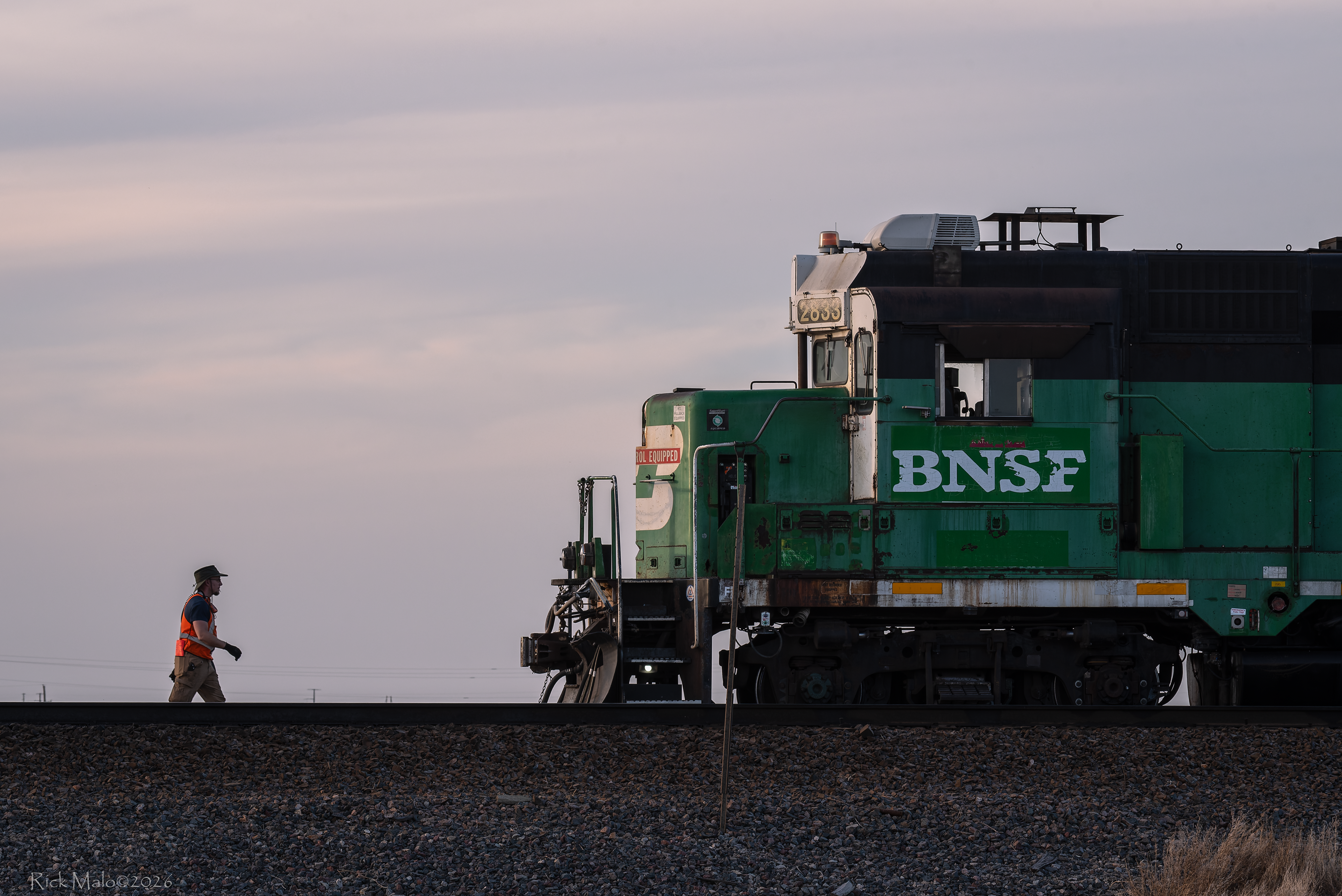
Here, on a pleasant Spring evening out on the Plains of Texas, amid the stout aromas of the Tyson beef packing plant just east of Amarillo, a 63-year-old veteran cuts a visage against a cloudy sky. The conductor has pulled the pin on a cut of cars and walks back to reboard the aged unit.
The form he approaches was conceived in the minds of men. It was birthed upon 20lb bond paper or vellum taped at the corners to a smooth and shellacked expanse of cabinet-grade birch plywood.
A draftsman stood before his table and gazed down upon the blank paper. To the side lay the tools of his trade: T-square, protractor, French curve, compass, scale, pencils of various hardness, eraser
He had been pulled from his duties of styling Coupe de Villes and Impalas and step-side C10s, and tasked with creating the future for the Electro-Motive Division.
General Electric had announced its 2,500 horsepower U25B, and there was no time to waste in countering their bid in the Horsepower Race.
The men in white shirts, black ties and pressed black slacks scooted their stools up to the drafting tables, and line-by-precise pre-CAD line, did just that.
It’s been 63 years since the 2833 rolled out of the erecting shop at La Grange wearing a shiny coat of Armor yellow and Harbormist gray, road number 723 painted in red indicating her place on the Union Pacific diesel roster. But her history goes back even farther than that. Trade-in F3s and F7s were stripped of all usable parts; their trucks slid underneath a new GP20 frame; a portion of their guts finding a home inside a new pressurized carbody built atop that frame.
They turned out a chunky brute whose 16-567D3 churned out 2,250 turbocharged horsepower and went toe-to-toe with GE’s new U-Boat.
But it was her styling that everybody raved about, and the aged still remember. The front face of the cab that angled forward gently, peaking between the two windshields; the rounded cab roof that stepped upward as if the graceful curves and rakish tailfins of a ’57 Cadillac had been mated to the roofline; and the puggish nose that only a mother could love, yet everybody loved. Everything above the walkways was brand new, almost radically so. The basic form of the GP9 had suddenly grown from adolescence into manhood and asked Dad for the keys to the car on Saturday evening.
It didn’t take long for the new units to become fan favorites, and they remain so to this day.
But, alas, the future only lasts a little while. Progress takes graceful curves and turns them into sharp angles, and once-cutting edges are ridden hard and put up wet, eventually turning into rusty old has-beens that find themselves stored on a weedy piece of track within earshot of a hissing acetylene torch.
Her styling would die with model designation GP30, soon to be overshadowed by the spartan cab of the follow-on models of the GP35 and GP40.
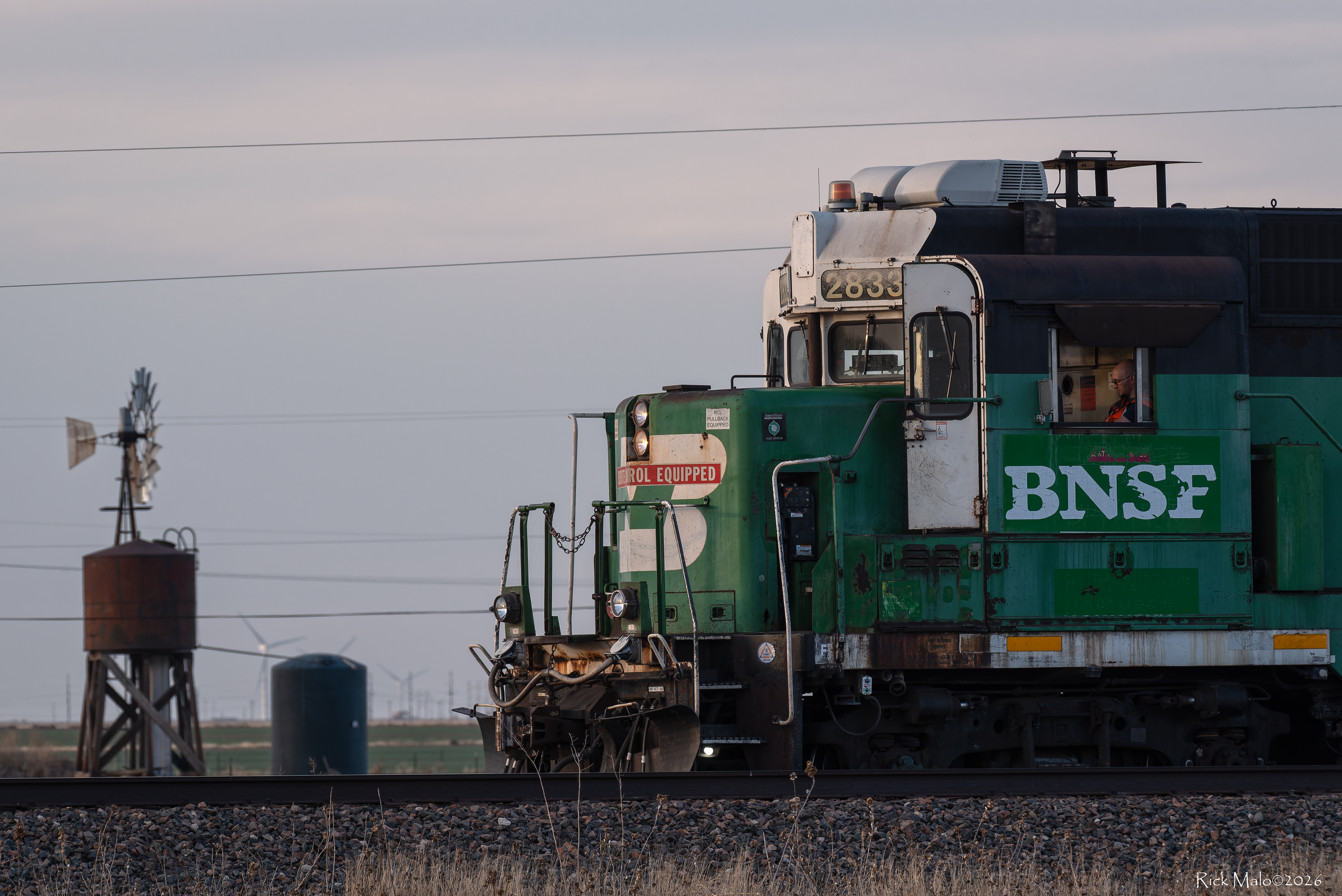
But, that a 60-something-year-old carbody and frame can still, today, earn its keep in the corporate rail world is a testament to those who designed and built her, and to those who maintain her still. Put 645 power assemblies in their 567 block, upgrade the electronics to Dash-3 standards, and she’ll roll almost indefinitely.
Though she looks the worse for wear, covered in road grime with rust peeking through the streaked and faded Cascade green, her very presence as she waits against a red signal east of Amarillo on a pleasant Spring evening in 2026, says something else---
There are no U25Bs running local freights out of Amarillo---
Or Fort Worth.
Or Omaha.
Or anywhere.
Guys in short-sleeved white shirts sat at drafting tables and designed her well.
Guys with callouses built her well.
And young conductors with floppy hats, safety vests, radios, and timetable shoved in the pocket of sturdy khaki work pants still grab the handrails and climb the steps.
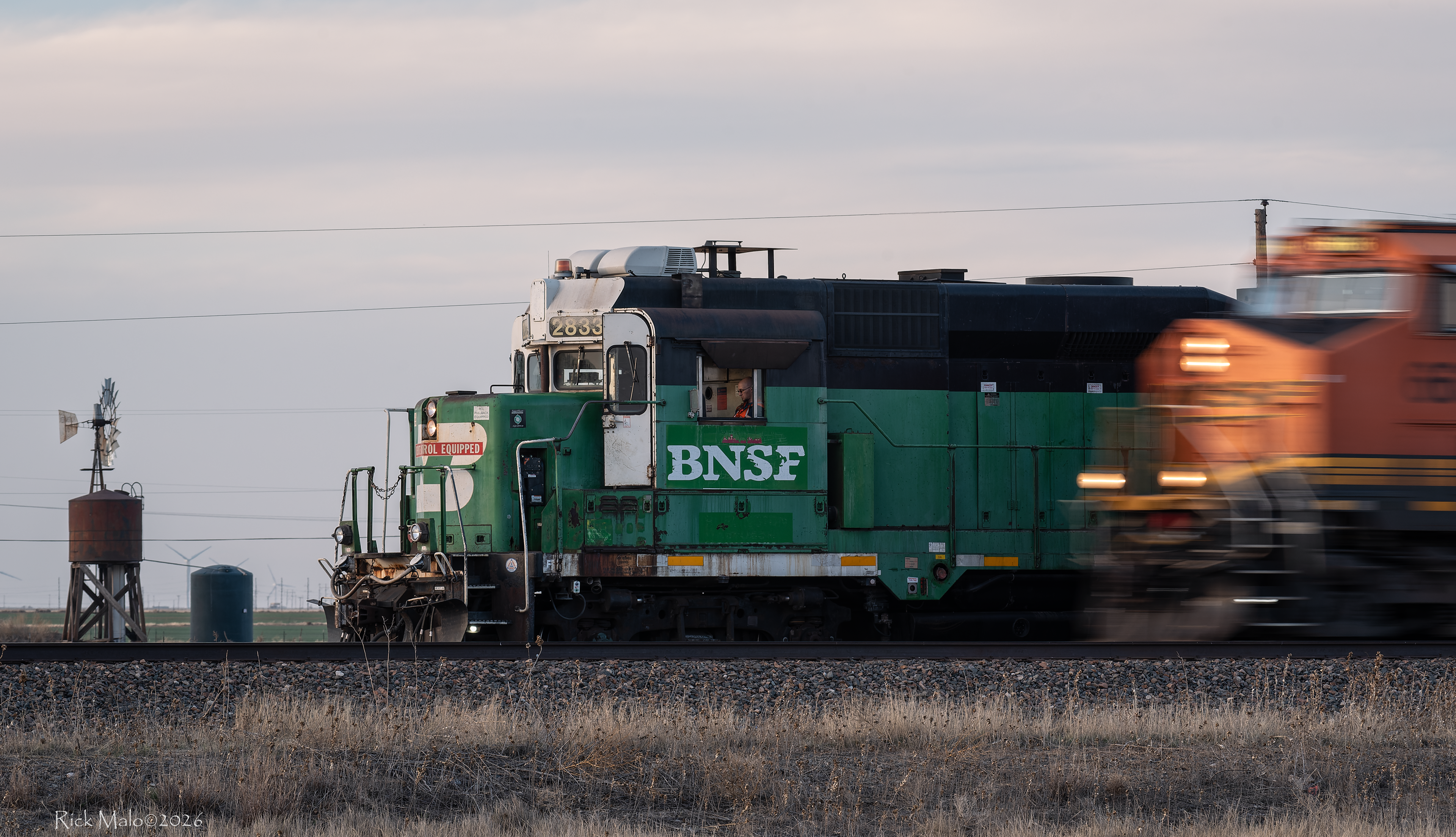
He’ll relax a bit and review his switch list while the engineer in the lead GP40 waits for the green.
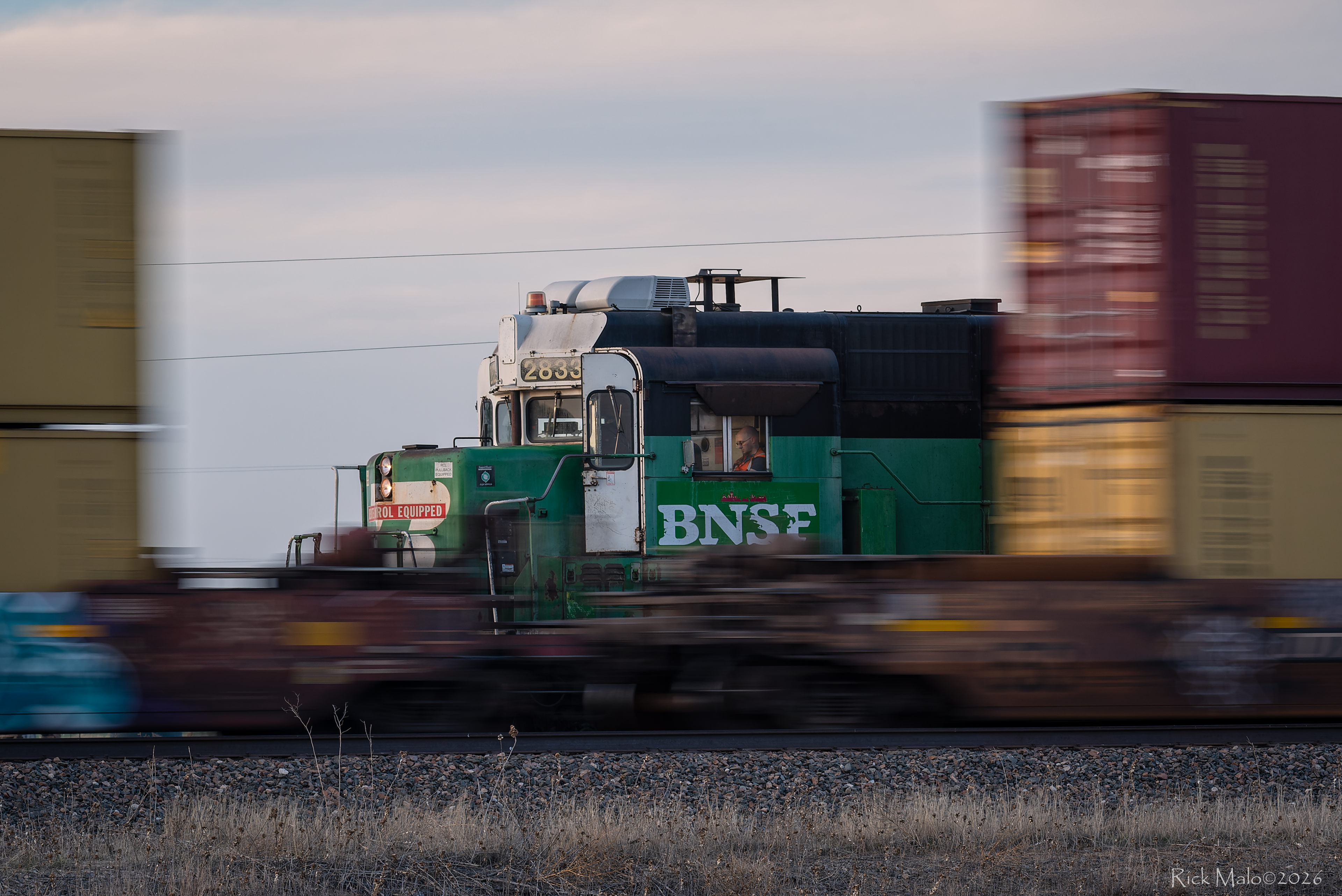
A fast GEVO-powered westbound intermodal slams by. He hardly notices the juxtaposition; the situational irony.
Did anybody ever really win the Horsepower Race?
Perhaps the hare has now become the tortoise, and it is no longer a question of horsepower---
But one of longevity.
Perhaps the finish line has become muddied a bit.
The future really does only last a little while.
And then it becomes the past.
And sometimes, if it is built well enough, the past sticks around a while.
---RAM
Rick Malo©2026
Thank you!